I keep reading articles telling business owners that their company needs to run without them if they ever want to sell it. I understand the argument, but I think we're overlooking an important distinction between a business that is owner-operated and one that is truly owner-dependent.
Let me give you two examples.
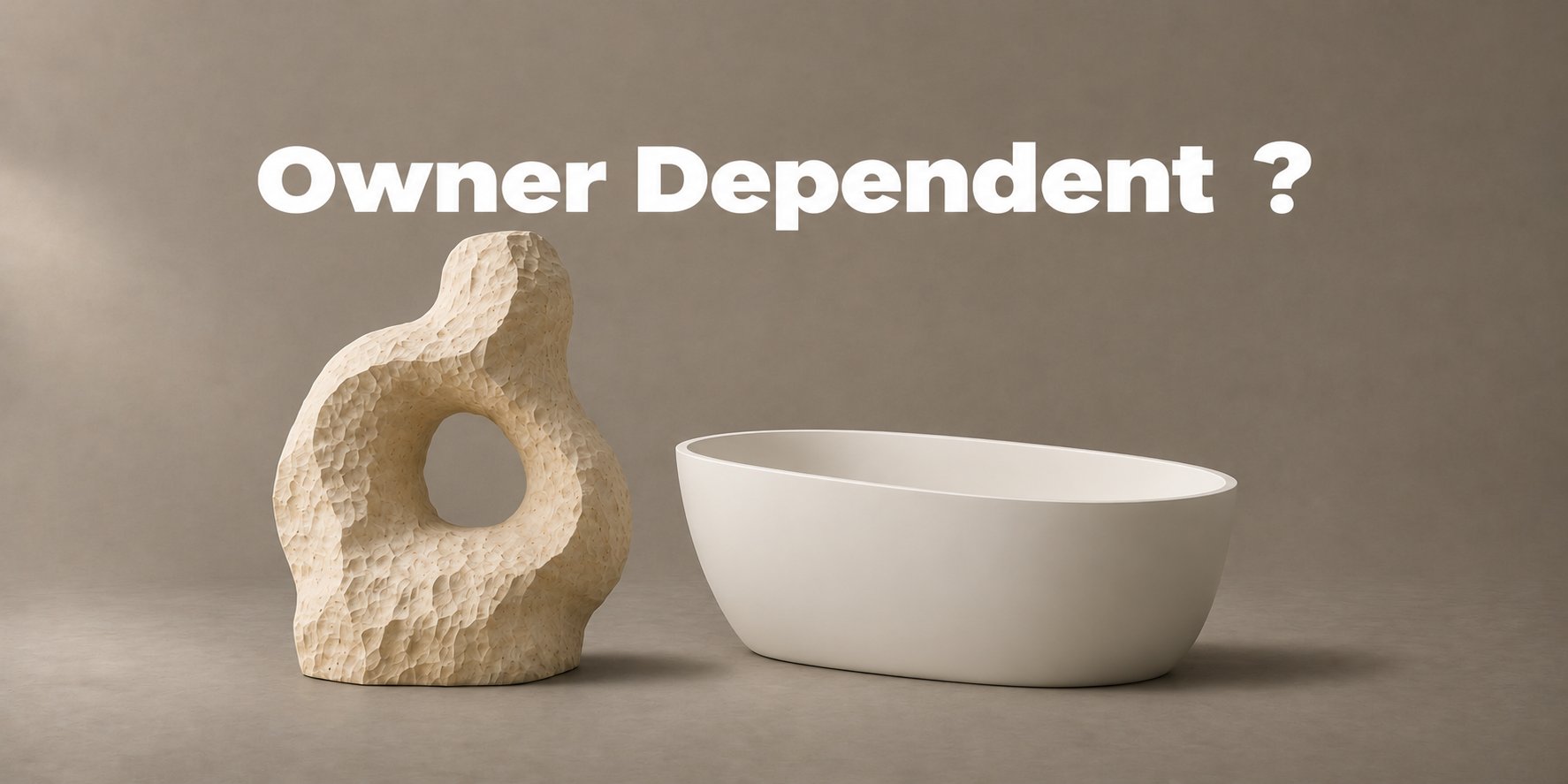
Jacques is a renowned sculptor. He has a very profitable business called “Jacqutures” with $1 million in EBITDA. His team of 15 employees manages the operation with great success, including all the logistics, marketing and exhibitions. Jacques can go on vacation for a month, and the business will keep running. You see where I am going here. This is not a business that can be sold independently of Jacques. It’s owner-dependent! No Jacques, no sculptures, no revenue.
Bob is a bathtub manufacturer. His company, “Bobtubs,” also generates $1 million in EBITDA. Bob, too, has 15 employees, but he is involved in virtually everything, from decision-making in accounting to production scheduling, and he even puts on his protective gear every day to spray fiberglass. Can this business be sold? Is it owner-dependent?
Operationally, yes. Economically, no.
The customers aren’t buying the bathtubs because Bob made them. They are buying because the company delivers a product of the quality they want at a price they are willing to pay. Everything Bob does can be taught and transferred to someone else.
This distinction matters enormously when valuing and selling a business. We need to understand whether the owner is simply performing functions that someone else could take over, or whether the company's revenue, customer relationships and competitive advantage depend on that particular individual.
If customers buy because of their relationship with the business owner and competitors can easily provide the same product or service, then customers might switch when a buyer takes over. That’s a serious problem.
I'm not suggesting that having management in place isn't valuable. Of course it is. But we shouldn't automatically treat every hands-on owner as a major valuation risk.
The question isn't simply whether the business can run without the owner. It's whether the business can continue making money without them.
What are businesses in your industry selling for? Request a complimentary Industry Multiples Insight.